

By Roel Hoang Manipon
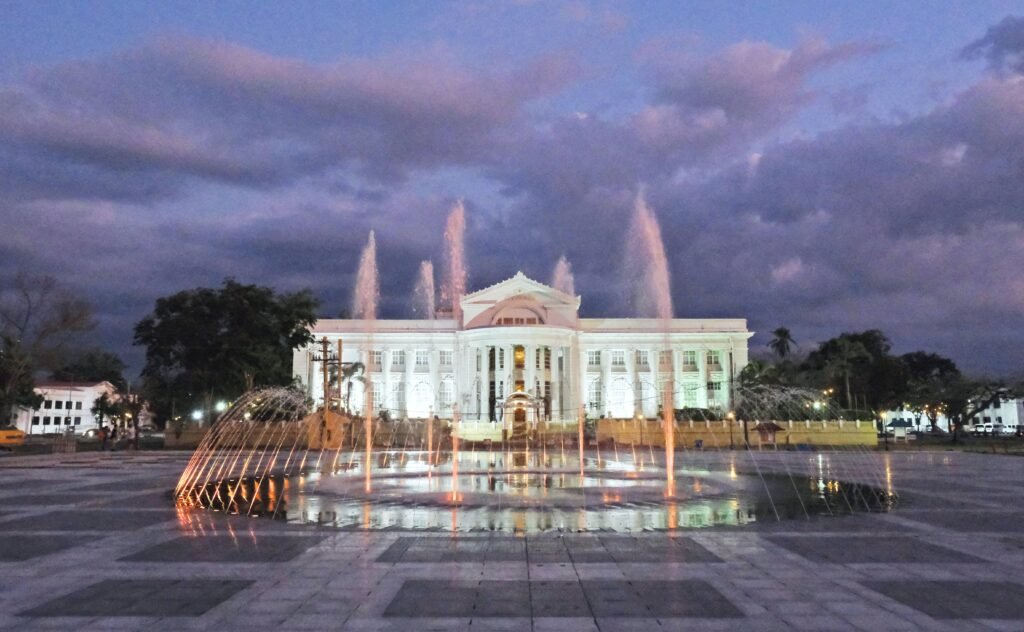
As the sun dipped into the horizon of the Lingayen Gulf, a new spectacle began to unfold at the Pangasinan Capitol Complex. The reflecting pool came alive in a wash of color—lights pulsing beneath the water, jets rising and falling in rhythmic bursts. From the shoreline, the view led the eye inward, toward a dancing fountain that frames the stately capitol building. It was a test and preview, but it was also a promise: a glimpse of a transformed civic landscape entering a new chapter under Governor Ramon “Mon-mon” V. Guico III.
Long regarded as one of the most picturesque provincial government centers in the country, the Pangasinan Capitol Complex in the capital town of Lingayen owes much of its character to its setting and history. Facing the gulf, its neoclassical lines rise amid open grounds and coastal air—a composition shaped as much by architecture as by geography. Designed by American architect Ralph Harrington Doane, the complex was built between 1918 and 1919, during the American colonial period. While heavily damaged during World War II, it was reconstructed from 1948 to 1949 and also underwent refurbishment in 2008. Now, the complex is undergoing its most ambitious transformation.

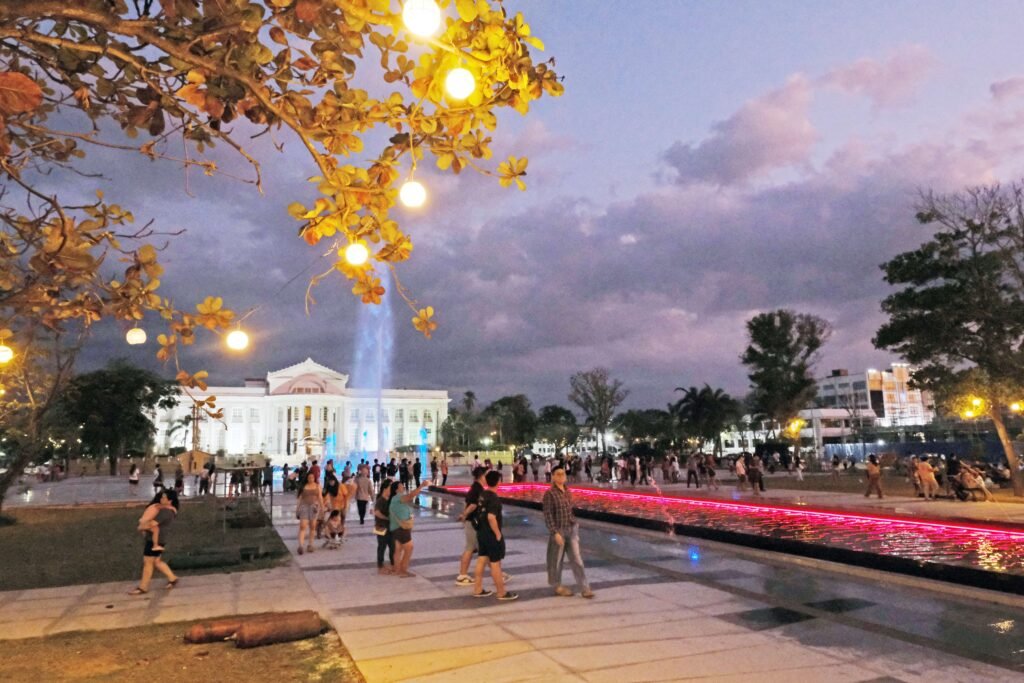
At the heart of the redevelopment is the 200-by-22-meter reflecting pool and interactive fountain—now emerging as the complex’s visual and experiential centerpiece. It is bordered by landscaped greens and planted with native species, including dita trees (Alstonia scholaris), whose fragrant blooms and long-standing medicinal uses anchor the space in local ecology. The effect is a civic environment that does not merely impress, but breathes.
Yet the transformation extends beyond aesthetics. The redevelopment integrates infrastructure and heritage. A Heritage Park is being established to display war relics and narrate Pangasinan’s past, while a modernized flood control and drainage system addresses long-standing environmental concerns. Rising alongside these is an 11-story Government Center, envisioned as a centralized hub for provincial services—bringing offices together into a single, accessible space.
Completing the vision is a 1,500-seat convention center, designed to position Lingayen as a major venue for gatherings. With existing facilities such as the Sison Auditorium and the Provincial Training Center, the Capitol Complex is poised to evolve into a cultural and economic node—one that serves not only governance, but also tourism, enterprise, and public life.
The scale of the effort was underscored in the governor’s own words during the 2025 State of the Province Address: “For the first time, Pangasinan will construct legacy projects that will redefine the landscape and aesthetically transform the Capitol Complex. Never before had there been any effort to do this.”
He described the Government Tower as a “one-stop shop” that will streamline services and attract both national agencies and private enterprises—an attempt to bring efficiency and economic dynamism into the provincial seat. The convention center, meanwhile, is seen as a catalyst for positioning Lingayen as the “conference capital” of the Ilocos Region.
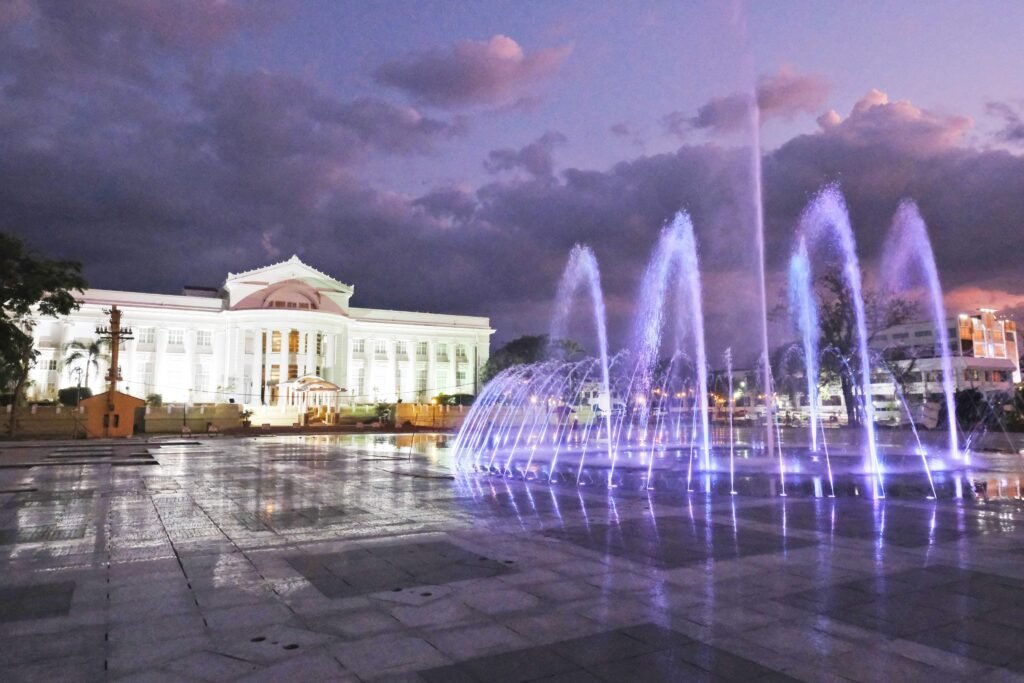
But perhaps the most immediate symbol of change is the reflecting pool and dancing fountain itself—an intervention that is as much about identity as it is about spectacle.
“No other reflecting pool and dancing fountain in the Philippines today even comes close to what we are about to unveil in Pangasinan,” the governor declared, framing the project as a new landmark not only for residents but also for visitors.
In many ways, the redevelopment draws a clear line between past and present. It acknowledges years when, as the governor put it, “things were left undone,” while asserting a renewed urgency in shaping the future. The language is pointed—contrasting stagnation with progress, mediocrity with excellence—but the physical outcome suggests something more measured: a layering of old and new, rather than a replacement.
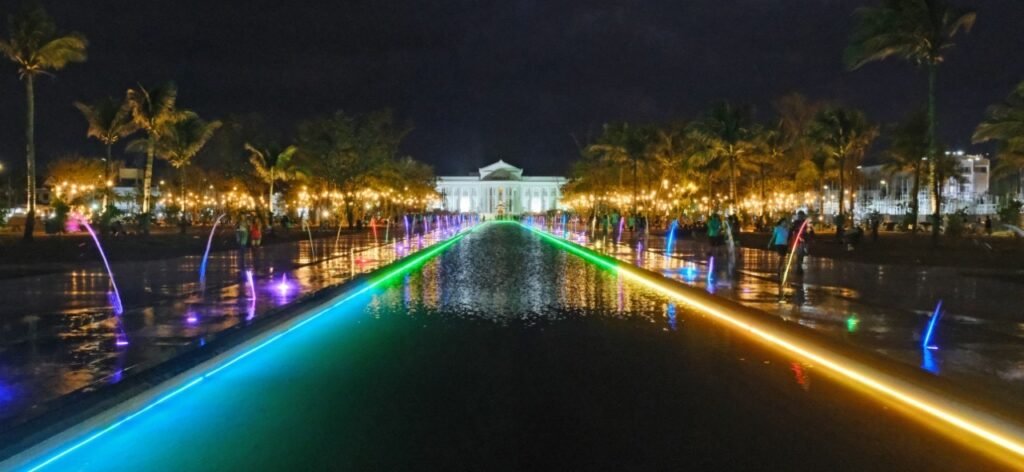
The Capitol Complex, after all, is not simply a site of government. It is a lived space—where history, daily life, and civic imagination intersect. Its neoclassical façade, once a symbol of colonial order, now stands before illuminated waters and modern structures that speak to contemporary aspirations.
As the fountains rose and fell against the twilight, what emerged was not just a revitalized complex, but a redefined sense of place. In Lingayen, the meeting point of sea and state is being reshaped—carefully, visibly, and with an eye toward the years to come.