

Photos by Roel Hoang Manipon
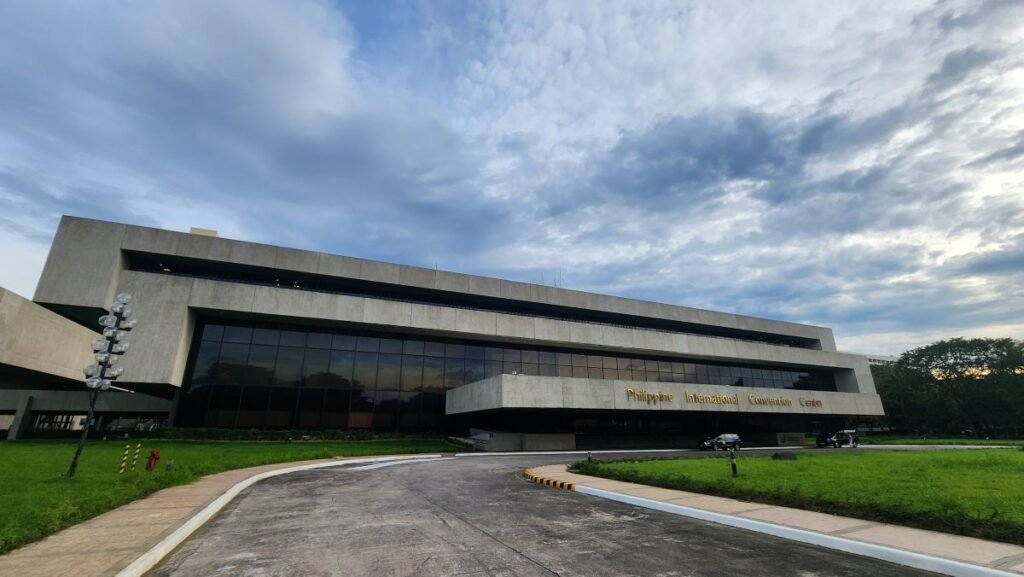
At the Cultural Center of the Philippines Complex, on reclaimed land between Manila Bay and Roxas Boulevard in Pasay City, the Philippine International Convention Center (PICC) rises as a monumental composition of concrete. For five decades, it has witnessed diplomatic gatherings, graduation and oath-taking ceremonies, corporate events, forums, exhibitions, concerts and celebrations.
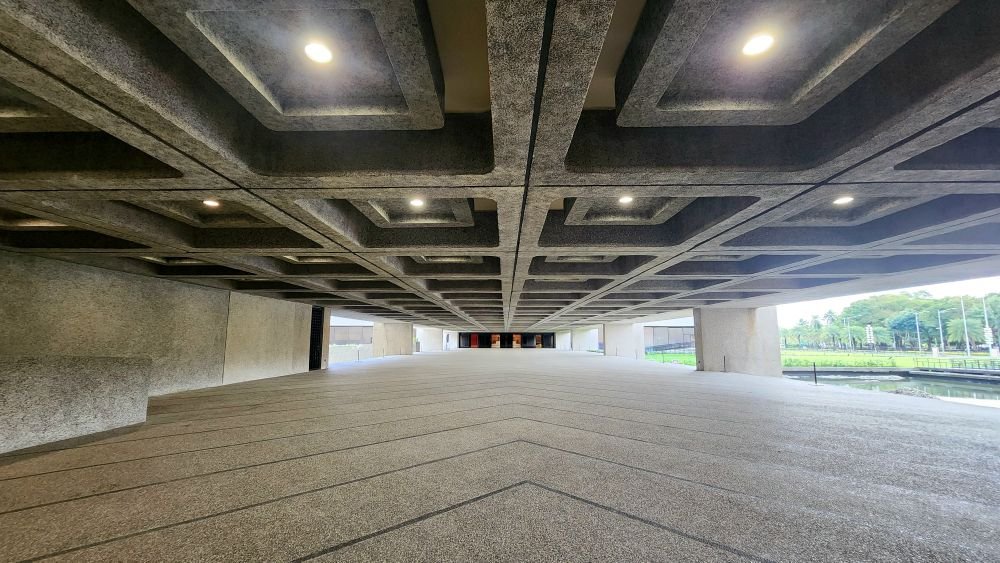
Its exterior is stark and muscular, but its interiors are unexpectedly sumptuous, their monumental scale softened by artworks, warm wood and intricate architectural details. Like the nearby Cultural Center of the Philippines, the complex displays National Artist for architecture Leandro V. Locsin’s mastery of Brutalism—an architecture of massive forms made to appear light, even floating.

Set on a 12-hectare site and encompassing more than 70,000 sq.m. of floor area, the PICC consists of five interconnected modules: the Delegation Building, Secretariat Building, Plenary Hall, Reception Hall, and The Forum. Instead of treating the convention center as a single monolith, Locsin divided it into distinct yet connected zones, linked by bridgeways, courtyards, and reflecting pools. The arrangement allows large occasions and smaller gatherings to take place within the complex at the same time.
The PICC formally opened on September 5, 1976, as Asia’s first international convention center. Its first major event was the annual meeting of the boards of governors of the International Monetary Fund and the World Bank, held from October 4 to 8 that year.
National Cultural Treasures
The National Museum of the Philippines recognized the PICC Complex and four intrinsic artworks as National Cultural Treasures on June 27, 2019. Their status was formally presented to the public on September 27, 2022, affirming the site’s exceptional historical, cultural, and artistic value.
Through the years, the PICC has remained a favored venue for major conferences and celebrations. It hosted meetings connected with the Asia-Pacific Economic Cooperation and the Association of Southeast Asian Nations, while also becoming the setting for graduations, oath-taking ceremonies, weddings and other milestones of generations of Filipinos. It is thus both an architectural monument and a repository of personal and national memory.
Time, however, had left visible wear on the five-decade-old complex despite periodic repairs and earlier renovations.
In 2025, the PICC closed for several months for an extensive renovation in preparation for its 50th anniversary and the Philippines’ hosting of ASEAN meetings in 2026. President Ferdinand R. Marcos Jr. led its reopening on September 30, 2025.
The occasion inevitably recalled the building’s complicated origins. Authorized during the administration of Ferdinand E. Marcos Sr. and closely associated with Imelda Marcos’ state-sponsored building program, the PICC emerged from the Martial Law period and has long invited debate over cultural ambition, political power and public spending, amid turmoil and abuses.
Restoration
Its restoration required more than cosmetic renewal but careful conservation of a protected landmark while modernizing and adapting it to contemporary use.
Leandro V. Locsin Partners, led by the architect’s son Andy Locsin, took part in the project, helping ensure that new engineering, security and audiovisual systems remained faithful to the original architectural language. Archival research guided many of the interventions, from the treatment of concrete and marble to the restoration of landscaping and lighting. Cultural agencies were also consulted for the project.
The front lawn, altered by previous renovations, was returned to its 1976 landscape design. Some palm trees were uprooted to make the facade more visible. From it, the five-story Delegation Building appears to hover—a characteristic Locsin illusion of weight suspended above the ground.
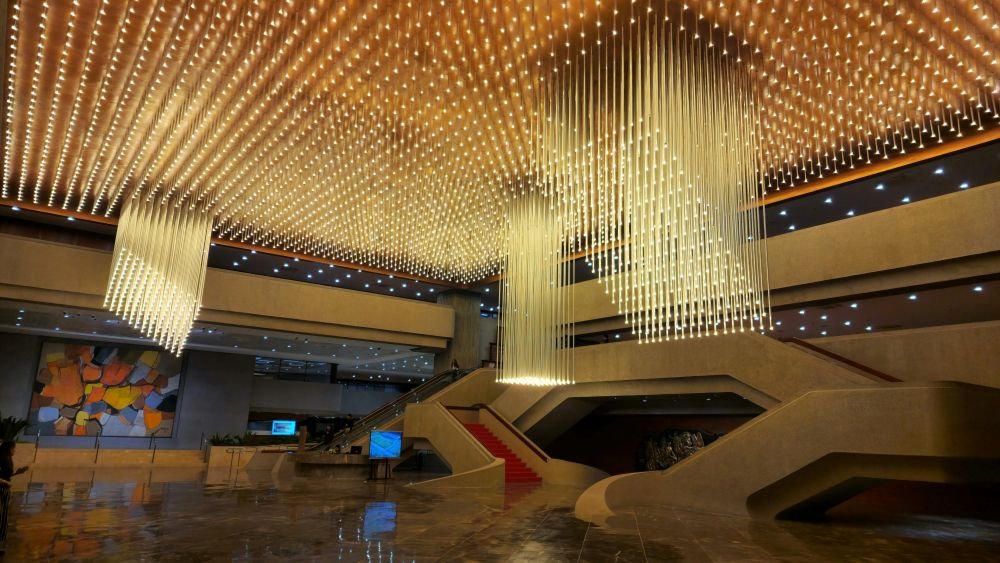
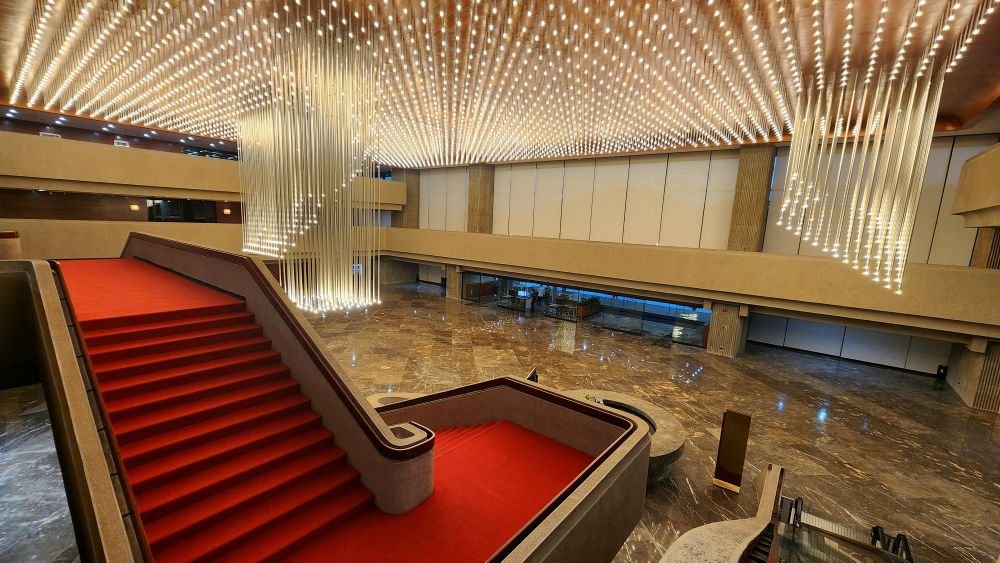
The building’s entrance was widened to improve circulation and event flow without compromising security. Inside, the main lobby has regained its glow: all 3,068 droplights were fitted with new bulbs, the ceiling was hand-painted with metallic powder, the marble floors were refinished, and the concrete walls were laser-cleaned.
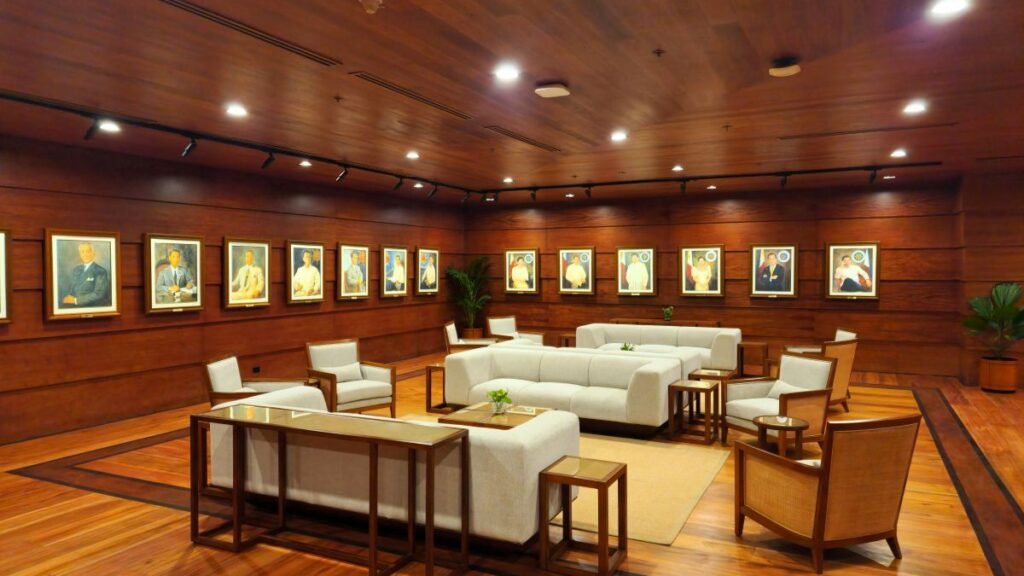
To the right of the lobby, the refurbished Delegation Lounge offers greater privacy and security for high-level guests. Conference rooms on the third and fourth floors now combine modern amenities with details sympathetic to the PICC’s architecture, while offices on the fifth floor have been redesigned with contemporary layouts and furnishings.
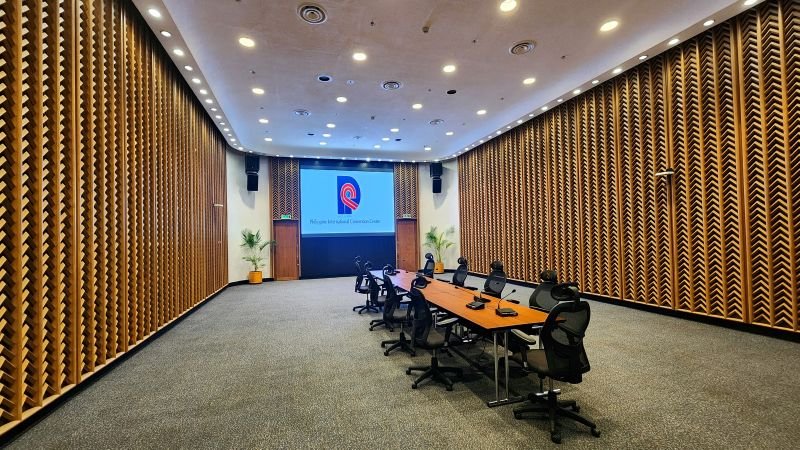
The three-story Secretariat Building contains additional meeting rooms, a banquet hall, exhibition areas, a restaurant and a cafeteria. Its meeting rooms retain their wooden lattice walls and high ceilings but now have LED screens and upgraded audio systems for hybrid meetings and multi-session conventions. The Secretariat Lounge extends these rooms with plush seating and warm, restrained lighting.
Plenary Hall and Reception Hall
The PICC’s best-known venues, the Plenary Hall and Reception Hall, likewise preserve their identities while incorporating new technology. Both now have large LED screens, improved audio systems and dimmable lighting.
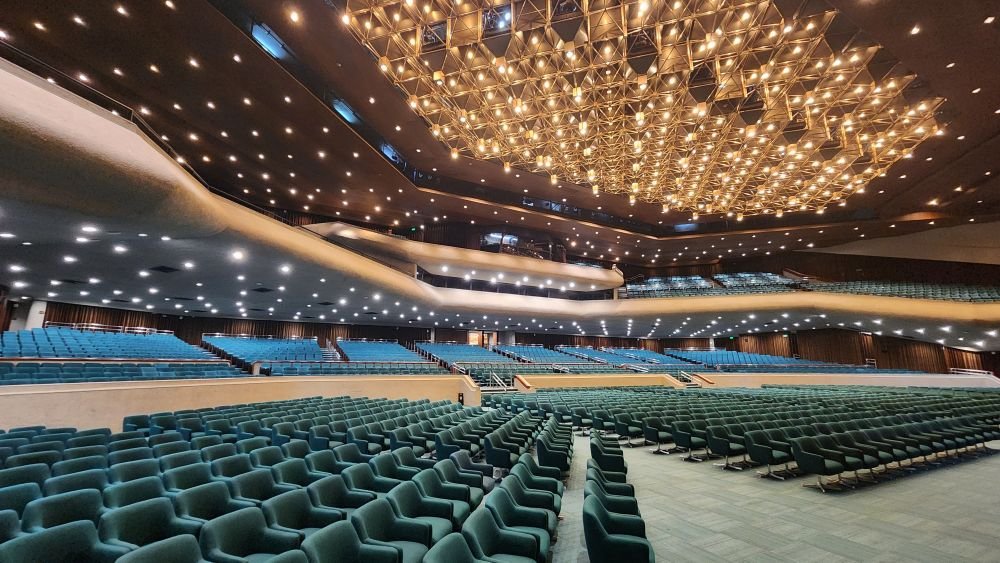
Designed for conventions, commencement exercises and stage productions, the tiered Plenary Hall can accommodate more than 3,500 guests in a theater-style arrangement. Its wood-paneled walls, ceilings and doors were refurbished, its seats reupholstered and fitted with new brass numbers, and its lighting and acoustics upgraded.
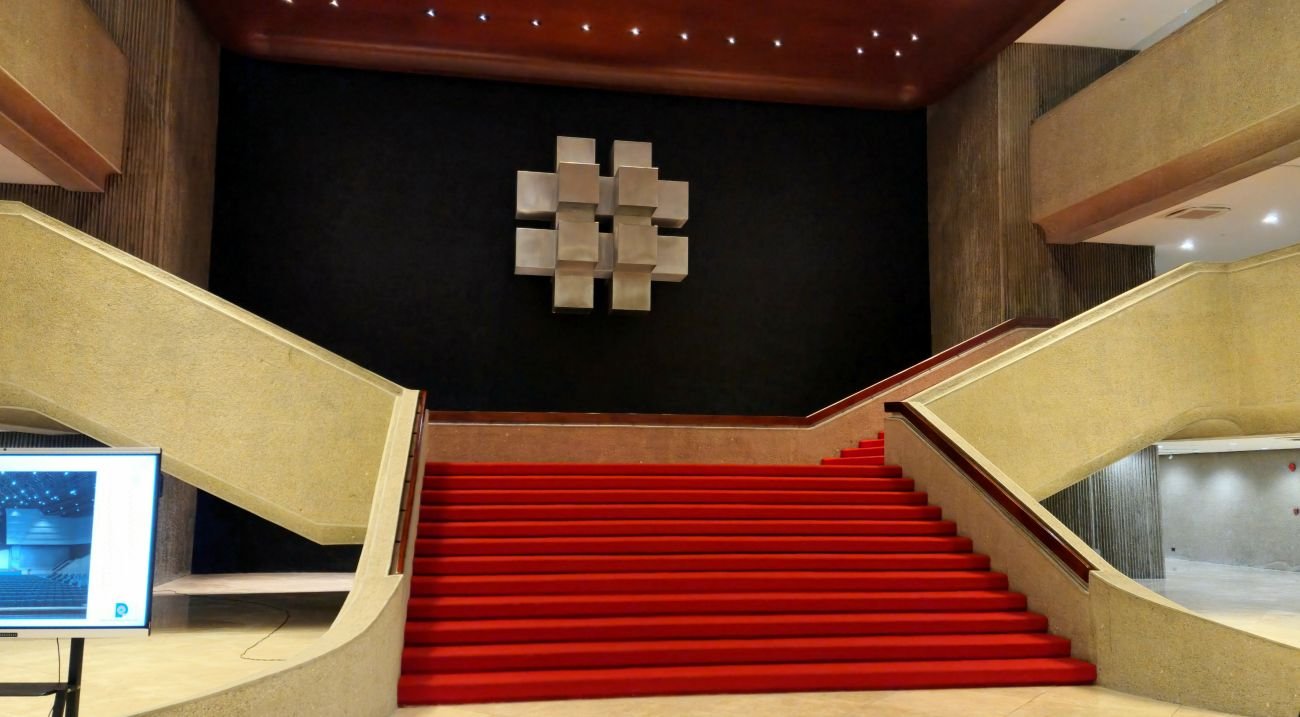
The pillarless Reception Hall, used for banquets, galas and large assemblies, remains distinguished by its broad red carpeting, high concrete ceiling and uninterrupted sight lines. Thousands of polished globe-like chandeliers illuminate its ornamented ceiling, refreshed fabric walls and refinished woodwork.
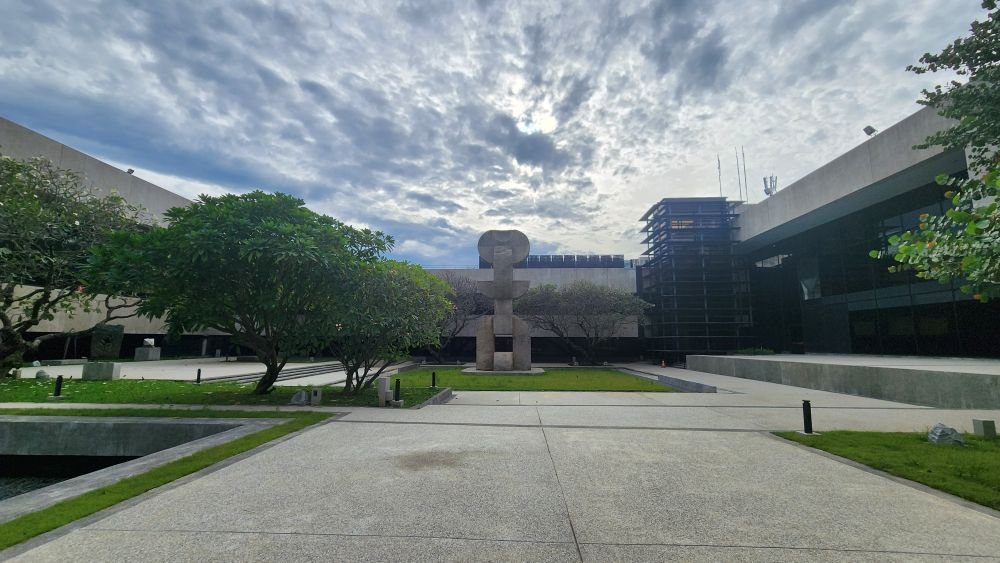
At the heart of the complex is the 3,400-sq.m. Courtyard, an open-air counterpoint to the surrounding concrete masses. Natural light, tropical greenery, and water give the monumental architecture room to breathe.
The Courtyard is now an open-air gallery for 20 sculptures donated by APEC member economies and transferred from the front lawn. They are joined by “Anito,” National Artist Arturo R. Luz’s monumental concrete sculpture. Restored to its original pebble-wash flooring, the space also features renewed ponds and landscaping, an infinity waterfall, ambient lighting and a 30-speaker audio system. This area took the longest time to restore, at five months.
New brass signs and improved wayfinding complement the interiors throughout the complex, while high-speed Wi-Fi and upgraded electrical and audiovisual systems support the technical demands of contemporary events.
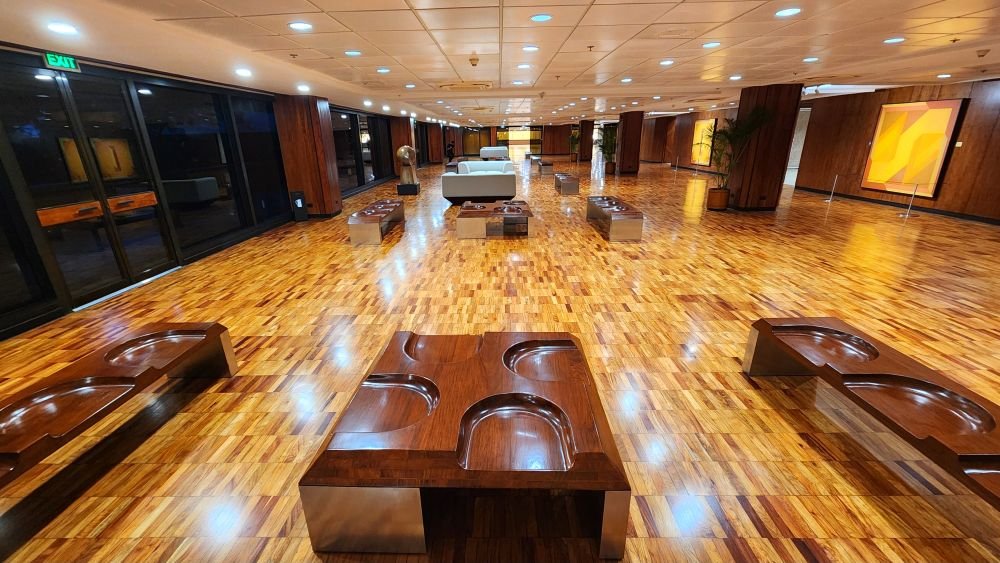
Art remains integral to the PICC. The National Cultural Treasure designation covers the complex and four works created for and permanently associated with it: Luz’s concrete “Anito” in the Courtyard and steel “Grid” at the Plenary and Reception halls’ lobby; National Artist José T. Joya’s abstract painting “Pagdiriwang” in the Delegation Upper Lobby; and National Artist Napoleon V. Abueva’s carved wooden chairs and lounge furniture distributed through the lobbies and hallways.
More than a hundred artwork
The complex also houses works by National Artists Carlos “Botong” Francisco, Hernando R. Ocampo, Ang Kiukok and Abdulmari Asia Imao, among others. More than a hundred works from the Bangko Sentral ng Pilipinas collection are displayed across its halls. During the renovation, artworks were protected or relocated, and museum-grade lighting and mounts were introduced to bring greater attention to pieces that visitors might once have passed without noticing.
As the PICC celebrates its golden anniversary in 2026, it faces both backward and forward. It remains a monument born of a brutal political era, but it is also an enduring showcase of Filipino architecture, art and hospitality—one continually reclaimed by the public through the memories made within it.
PICC General Manager Nicolette Ann P. Cruz has emphasized that institutional and personal milestones in Filipino life are celebrated at the center.
“We hope to have that continuous honor of being part of the core memories of each and every one of our countrymen,” she said.