
By George Ordona
Photos by Joseph Bautista
Namamasko po! That Christmas greeting could be a lighthearted tease from a close friend or relative or a monotonous humdrum from persistent carolers. Christmas is a season of giving and family reunions. It shows devotion to faith, family, and community. It also reflects the country’s rich cultural heritage and strong Catholic traditions.

Simbang Gabi
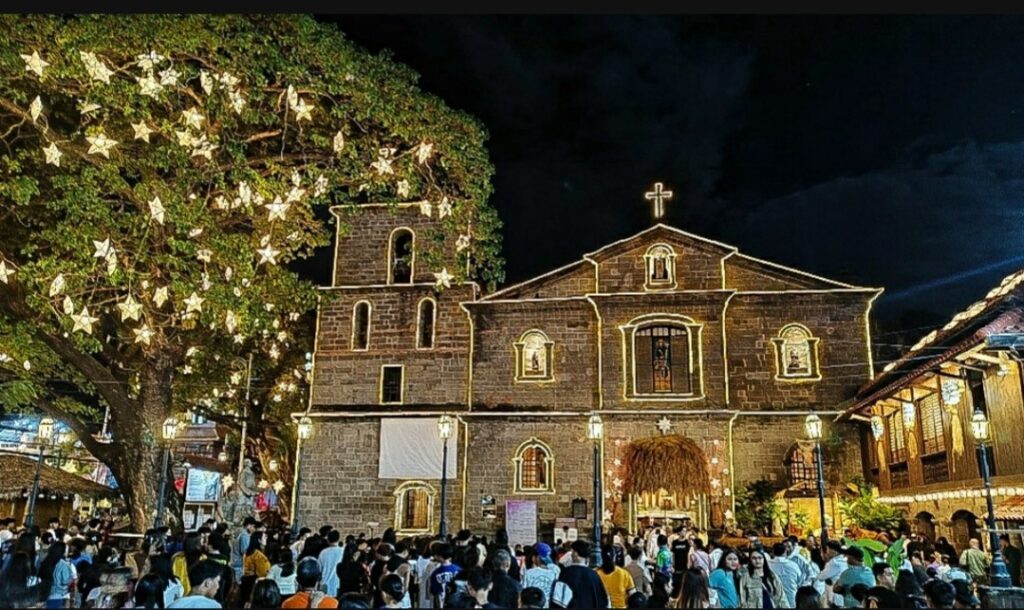
This Christian heritage is best depicted in the Simbang Gabi, Noche Buena, and other practices. The Simbang Gabi or Night Mass is a devotional nine-day series of dawn Masses which culminates on Christmas Eve. It is also known as Misa de Aguinaldo or Misa de Gallo which means Mass of the roosters since it is held very early when the roosters crow. This was originally a practical compromise to farmers to attend Mass before they start their day. In modern times, office workers can still go to Mass since most Simbang Gabi start between 4 AM and 5 AM. To accommodate more churchgoers, anticipated Masses have been introduced. The most crowded days are usually the first and last days. Some Filipinos believe if you complete the nine Masses, your petition or wish will be granted.
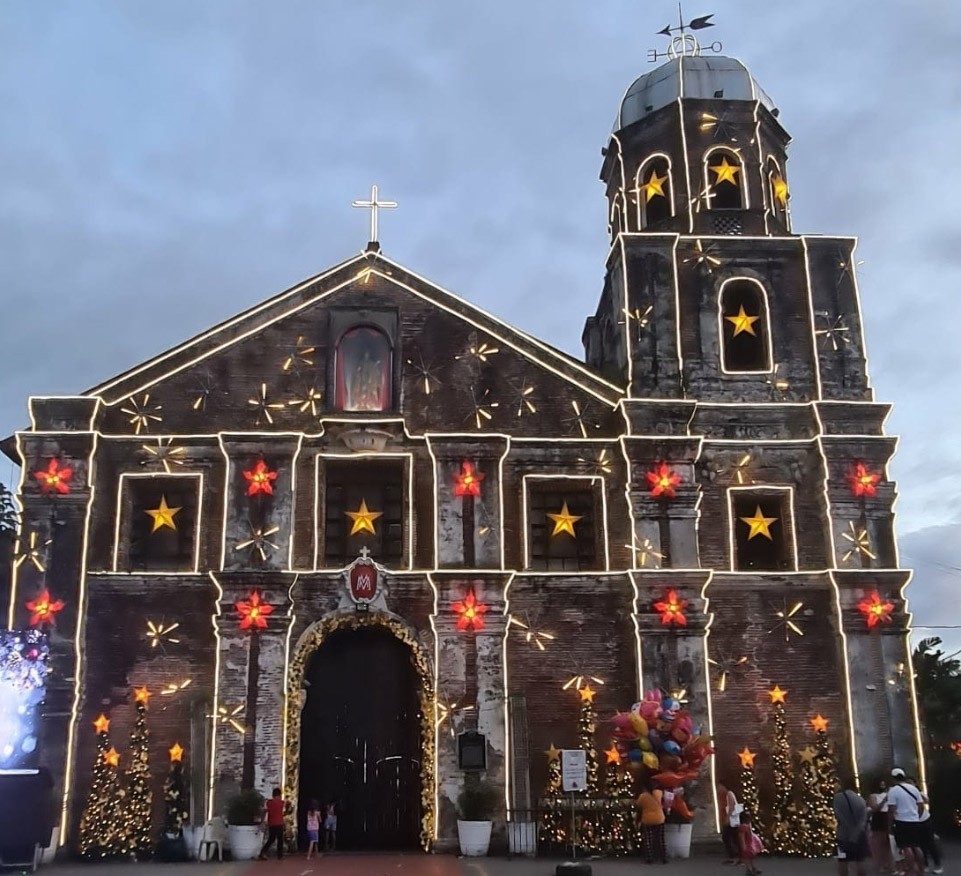
One of the best places to attend Simbang Gabi is at the Las Piñas Church (St. Joseph Parish) known also as the Bamboo Organ Church. Many people flock to this church to attend Simbang Gabi because of the world-famous Las Piñas Boys’ Choir who perform regularly.
Bibingka, Puto Bumbong, Noche Buena
Misa de Gallo is not complete without bibingka (baked rice cooked in a claypot) or puto bumbong (steamed purple rice cake served with butter, sugar and grated coconut) along with hot chocolate or salabat (ginger tea).
On Christmas Eve, Filipino families celebrate Noche Buena (Good Night) after attending Christmas Eve Mass. It is a festive meal with traditional dishes such as lechon, queso de bola, ham, fruit salad, and castañas (chestnuts).
Central to Philippine Christian celebrations are the parols (lanterns) and the belens (Nativity Scene). Christmas trees are displayed in houses, as well as hotels and malls which compete for the most stunning tree of the season.

Parol
A parol is an ornamental lantern which were traditionally constructed using bamboo sticks and covered by colored Japanese paper and illuminated by candles, oil lamps and carbide lamps. Most common is the five-pointed star symbolizing the star of Bethlehem.
There are still traditional parol makers in Parañaque and Las Piñas. The best source of traditional handmade lanterns is in Las Piñas which is known as the Parol Capital of Metro Manila. Parol makers can be found in areas like Barangay Elias Aldana.
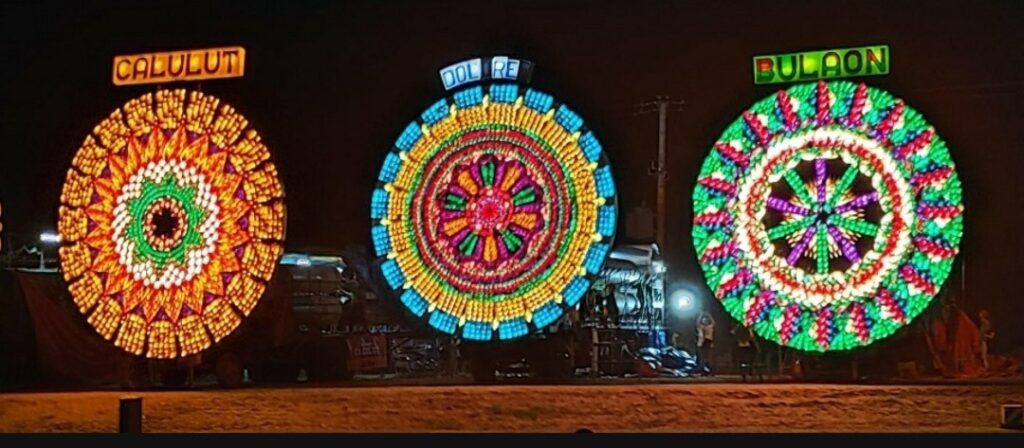
San Fernando, Pampanga
Traditional parol making is getting uncommon. Modern parols use other materials such as capiz shells, glass, beads, plastic straw, wood, even metal. In San Fernando, Pampanga, lantern making has been taken to a different level. Giant, intricately designed lanterns, some reaching up to 30 feet in diameter, are showcased during the San Fernando Lantern Parade. Neighborhoods compete and lanterns are judged on light sequencing, music synchronization and overall design. The Giant Lantern Festival has been a tradition in San Fernando, making the city as the Christmas Capital of the Philippines.

Maytinis
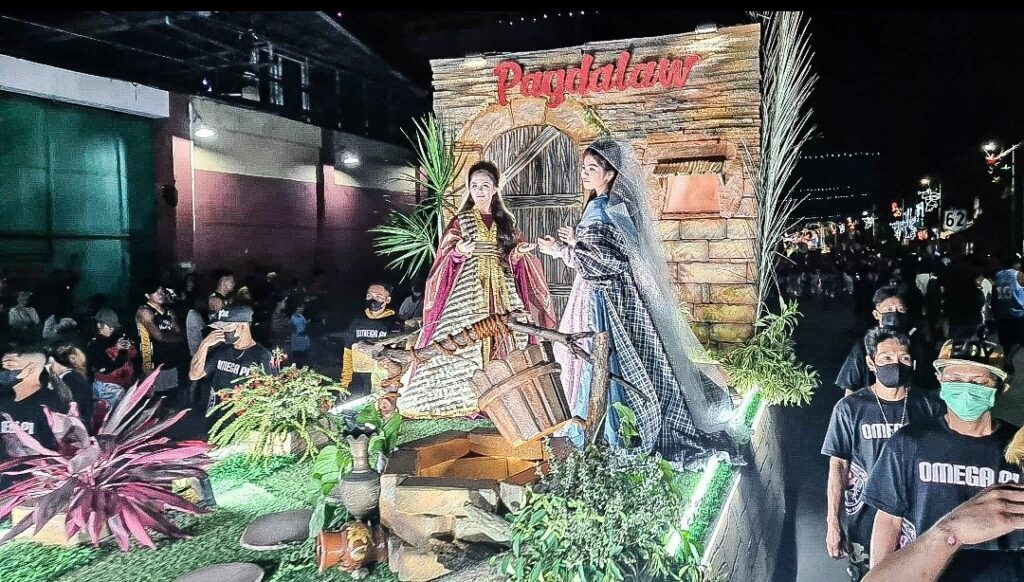
South of Manila in Kawit, Cavite is a beloved tradition called Maytinis which is held every Christmas Eve. It dramatizes the journey of Virgin Mary and Joseph as they search for a place to stay. Floats depicting biblical stories showcase scenes from Old to New Testament. Street performances include marching bands and costumed participants. The festival ends with the Christmas Eve Mass.
The Philippines has one of the longest Christmas celebrations in the world starting with “ber” months up to the first week of January. It is a season for gift giving, specially for children who, upon receiving gifts, would say “Mano po,” a fitting response to show respect and love toward the giver. The holiday season is more than just a time to reconnect with loved ones and cherish family bonds. It is also a time for people of faith to reflect on its spiritual significance.
George Ordoña is a seasoned traveler who has visited 70 out of 82 provinces in the Philippines. He is an accredited DOT tour guide. Aside from the regular tours, he also organizes heritage walking tours and food crawls in Quiapo and Pampanga. As a mountaineer and scuba diver, he is at home doing adventure travel. He can be contacted via 0960-6975930 or email at gpo.islander@gmail.com.